

Environmental protection at the Pori site
The Aurubis Finland production site is located in the western part of Finland in the town of Pori next to the Kokemäenjoki River. The copper foundry and rolling mill are in a copper industrial park along with other companies that work with copper. The site comprises an area of about 78,000 m².
The rolling mill in Pori with 325 employees is a state-of-the-art hot and cold rolling mill, and it is fully integrated from casting to finishing. In 2025, we produced around 50,000 t of strip, sheet, plate and circles as well as around 60,000 t of shapes, more than half of which for internal use. The selection of high-quality products covers a wide range of copper and copper alloys. Copper scrap is the main input for production, and recycling materials account for around 65 % of the raw materials used in the foundry. In 2025 Pori started to use totally CO2 free electricity, and we installed an own solar power plant as one source of electricity. The waste heat that arises in the foundry is sold to local power plant Pori Energia. The waste heat produced when heating the cakes during the hot rolling process in the walking beam furnace is reused to preheat the incoming combustion air for the furnace. The excess waste heat is collected in waste heat batteries for later heating use. Emissions of dust and volatile organic compounds (VOCs) are reduced to a minimum using afterburning and filters in the foundry. Cooling water in the smelting process circulates in a closed system. Cooling and process water from the rolling mill is treated by an external service company, including the removal of copper and oil residues. In 2025, around € 180,000 was invested in measures to improve our environmental performance.
Environmental Protection - facts & figures
Air emissions
At the beginning of January 2013, a project to improve the degree of filter house utilization started and improved the degree of utilization by about 5 % during 2013. Metal emissions in exhaust gases have fallen considerably over the years.

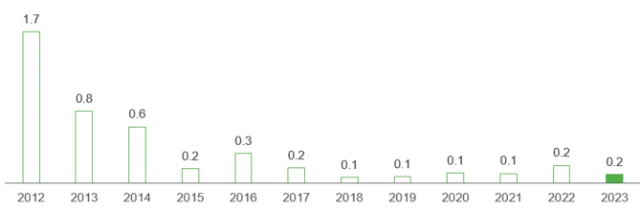
Metal emissions to air (Cu/Zn/Pb) in g/t of copper products
Energy consumption
Total specific energy consumption in MWh/t of copper products sold is decreasing.

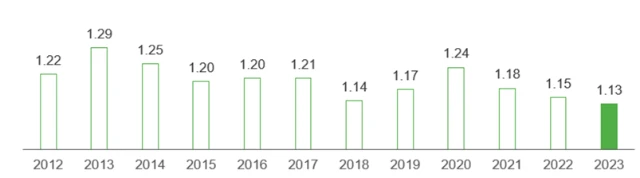
Total specific energy consumption MWh/t Cu of copper products
Current important environmental targets and measures
Waste management
New color-coded waste bins for paper, plastic and energy waste in rolling mill
- Date: 2025
- Status: in progress
Extend emulsion usage time at cold rolling
- Date: 2025
- Status: Implemented
Energy
Heating system repairs and adjustment repairs at the rolling mill. Investigation into heat recovery
- Date: 2025
- Status: Implemented
Changing energy monitoring system, improving the visibility of consumption data, and planning machine-specific savings
- Date: 2025
- Status: in progress
Water Emissions: More pH measurements in rolling mill
- Target: Cu emission below 0,5 mg/l
- Date: 2027
- Implementation stage: in progress
Replacing pre-heating furnace with electric one to reduce CO2 emissions
- Date: 2030
- Status: planning started
Environmental measures that have been implemented (“Milestones”)
2025 Enhanced air emission control through automated environmental reporting
Since 2025, an automatic online environmental reporting system has been fully operational. The system continuously monitors the filter house performance, ensuring it remains above the target of 98%. Real‑time data enables faster response to deviations, strengthens compliance, and supports long‑term reduction of air emissions.
2025 CO₂ free electricity supply and reduced diesel consumption
Since January 2025, the site has been powered entirely by CO₂‑free electricity. This transition results in substantial annual CO₂ savings and forms a key pillar of the site’s decarbonization strategy.
A major step toward lowering fossil‑fuel use was taken in 2025 through the replacement of diesel cars and forklifts with electric vehicles and e‑forklifts. This shift reduces diesel consumption substantially and promotes electrified logistics across the site.
2025 Reduction of water emissions via modernized pickling line
A major milestone in water protection was reached in 2025 with the completion of the replacement investment in the pickling line. All three implementation phases were finalized successfully. The upgraded line now meets the target of achieving copper emissions below 0.5 mg/l, significantly improving wastewater quality and supporting sustainable water management at the site.
2024 Integration of double sided solar panels
In 2024, double‑sided solar panels were successfully integrated into the site’s energy system. This investment increased the share of locally generated renewable electricity and reduced the dependency on external energy supplies. The project marks a clear step toward expanding sustainable, decentralized energy solutions at the plant.
Downloads (PDF)
-

Um die heruntergeladene Komponente zu sehen den QR code scannen
ISO 45001:2018
PDF
1 MB
-

Um die heruntergeladene Komponente zu sehen den QR code scannen
ISO 9001:2015
PDF
1 MB
-

Um die heruntergeladene Komponente zu sehen den QR code scannen
ISO 14001:2015
PDF
1 MB
-

Um die heruntergeladene Komponente zu sehen den QR code scannen
ISO 50001:2018
PDF
1 MB