


Iron silicate fines
Iron silicate fines is a building material produced by Aurubis Bulgaria that combines reliability, durability, and exceptional versatility. It is used in all stages of the construction process—from load-bearing reinforced concrete structures, through masonry, to fine finishing works such as screeds, mortars, and plasters.
Since the end of 2022, the material has been actively used in the construction of buildings, road and hydraulic structures, pavements, and various concrete products in both urban and suburban environments. This makes it a key component of modern construction.
With its industrial origin and stable characteristics—both in terms of chemical composition and physical properties—iron silicate fines ensures predictability and high quality in production. This simplifies technological processes and contributes to the consistency of the final product.
Another important advantage is its environmental benefit. Its utilization leads to the development of innovative building materials with a lower carbon footprint. Iron silicate fines is among the first in the sector to be certified by EPD, which verifies to its environmental characteristics and life cycle assessment.
The material demonstrates excellent compatibility with basic raw materials in construction such as limestone, clay, clinker, cement, sand, crushed stone, and chemical admixtures. This makes it easy to integrate into various building materials.
The wide range of applications combined with high performance makes iron silicate fines a reliable choice for improving the quality of construction products. It has several certificates for specific applications, and its production is subject to annual production control by an independent notified body.
Basic characteristics of ISF: |
|
|
Particle shape |
angular |
|
Appearance |
Anthracite |
|
Bulk density |
1800 kg/m3 |
|
Specific density |
3700 kg/m3 |
|
Moisture content |
10-12% |
|
Loss of ignition |
0,01% |
|
Friction angel |
70% |
Composition: |
|
|
Element |
Typical range |
|
Fe elem. |
46% (as Fe2O3>60 %) |
|
SiO2 |
27% |
|
Al2O3 |
3.20% |
|
CaO |
1.80% |
|
MgO |
0.70% |
|
Zn |
1.50% |
|
Cu |
0.42% |
|
S |
0.36% |
Applications:
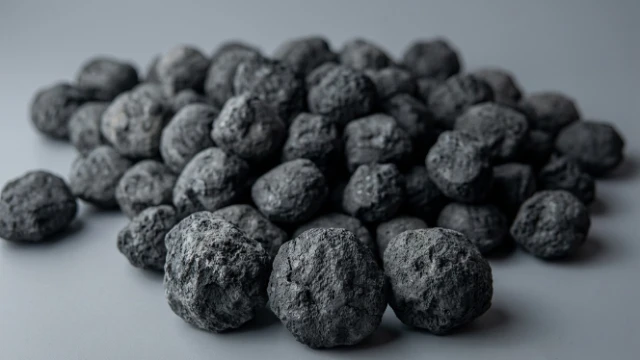
Cement clinker
The growing pressure to decarbonize the cement industry has led to iron silicate fines being used more as a sustainable raw material. In addition to replacing natural sources of iron oxides, it helps optimize the entire production process by improving energy efficiency.
One of the current trends is the use of so-called alternative raw mix designs, which aim to reduce the clinker factor and CO₂ emissions as early as the calcination stage. Thanks to its high content of iron and silicon in an easily assimilable form, iron silicate fines promotes faster formation of the liquid phase in clinker kilns, leading to:
- lower burning temperatures during the formation of clinker minerals;
- shorter residence time in the kiln;
- reduced fuel consumption;
- ready-to-use source of iron, without the need for additional processing;
- elimination crushing and grinding processes, by leading to energy savings;
- flexibility for application of both dry and wet production processes;
- creating optimal conditions for mixing and homogenizing of the raw material blend;
- reducing or completely eliminating the need for additional mineralizers;
- helping to optimize the chemical composition and stability of the final product.
The chemical composition of iron silicate fines consists mainly of minerals such as fayalite, magnetite, pyroxenes, and quartz—in the form of iron and silicon oxides—which determine its basic properties and give the name of the material.
Element |
Typical value |
Range |
|
Fe |
46,0% (Fe2O3>60 %) |
(44,0÷48,0)% |
|
SiO2 |
27,0% |
(26,0÷28,0)% |
|
Al2O3 |
3.20% |
(2,7÷3,7)% |
|
CaO |
1.80% |
(1,3÷2,5)% |
|
MgO |
0.70% |
(0,6÷1,1)% |
|
Zn |
1.50% |
(0,9÷2,8)% |
|
Cu |
0.42% |
(0,36÷0,48)% |
|
S |
0.36% |
(0,25÷0,55)% |
For more than 20 years, iron silicate fines has been successfully used by all leading international companies in the cement industry in Bulgaria, such as Heidelberg Materials, Holcim, and TITAN, which is proof of its effectiveness, reliability, and contribution to more sustainable production process. The material is also used by other cement clinker manufacturers on the Balkan Peninsula and in the United States.
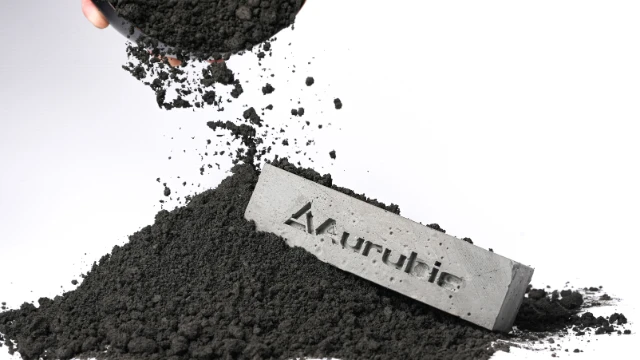
Blended cements
Iron silicate fines is being increasingly utilized as a mineral additive in blended cements, contributing to more sustainable production and optimized performance characteristics. Based on the principles of the circular economy, the material allows for partial cement replacement while maintaining the necessary technical characteristics of the end products.
Aurubis holds a European Technical Assessment (ETA) certifying the possibility of replacing up to 20% of the cement with iron silicate fines, depending on the specific application and concrete requirements. This makes the material a reliable component in modern low-carbon cements and concretes.
Iron silicate fines, as a type of mineral additive, is a key element in the development of blended cements. It is used to:
- reduce clinker content and, consequently, CO₂ emissions;
- improving the durability and resistance of concrete;
- controlling the heat of hydration;
- accelerating the setting and hardening processes.
Iron silicate fines fits into the category of Type II mineral additives (with pozzolanic/latent hydraulic properties), which actively participates in the processes of the formation of the cement paste.
To ensure the reliable use of iron silicate fines in concrete, the material has been tested in accordance with CEN/TR 16639:2014—a methodology for determining the so-called k-factor.
The k-factor reflects the effective contribution of the mineral additives to the strength and durability of concrete compared to a reference cement. Based on the conducted tests, specific k-values have been determined for iron silicate fines for various concrete classes, which allows for:
- precise design of concrete mixes;
- controlled reduction of cement content;
- correct selection of water content;
- compliance with European standards and best practices.
With its proven effectiveness and certified characteristics, Aurubis’s iron silicate fines has established itself as an innovative and sustainable mineral additive for the new generation of blended cements.
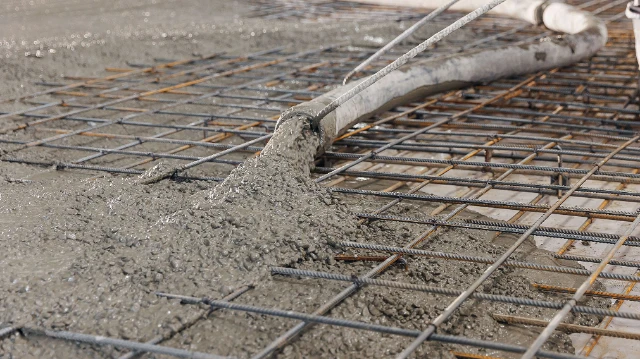
Ready-mix concrete
Ready-mix concrete is the most widely used type of concrete, produced at concrete plants in accordance with specific requirements and delivered directly to the construction sites. It is characterized by controlled quality, optimal workability, and the ability to adapt to various structural and technological requirements. Thanks to its versatility, it is widely used in various elements of the urban and suburban areas and it is the most widely used material on our planet.
The use of iron silicate fines in the composition of ready-mix concrete leads to a significant improvement in both the properties of the fresh mix and the characteristics of the hardened concrete. It contributes to better workability, reduced water absorption, and increased density, which in turn leads to a significant increase in the durability of structures.
The increased resistance to cracking and porosity, as well as the stable chemical composition and physical properties, contribute to a smoother and more homogeneous surface, making iron silicate fines a highly effective and reliable additive for modern concrete.
There are many applications of ISF in ready mixed concrete:
- Structural elements of the buildings (beams, columns, slabs, foundations);
- Bridges (piers, slabs, beams)and tunnels;
- Industrial facilities and production sites;
- Marine structures, including coastal structures (reinforced concrete walls, retaining walls, canals, spillways, shoreline protection, retaining walls, etc.);
- Exposed concrete (walls, slabs, beams, staircases).
There are several benefits of ISF valorisation in ready-mixed concrete:
- Certified as a concrete aggregate according to EN 12620:2002+A1:2008Increased strength and density of concrete;
- Improved durability, especially waterproofing (Cw0,8 & Cd50 (BNS EN 206:2013 & NA.N)) and protection against the aggressive impact of chlorides, sulphates and salts
- Concrete volume stability (no shrinkage, no swelling);
- Reduced heat of hydration;
- Increased abrasion resistance (18±0,2cm3/50cm2 (BNS EN 13892-3:2015));
- Significantly increased frost resistance (∆m=0,2% & ∆f=2,3% (BNS EN 206:2013+A1:2016)).
Iron silicate fines has been used in the daily production of ready-mix concrete since 2022 by dozens of concrete plants.
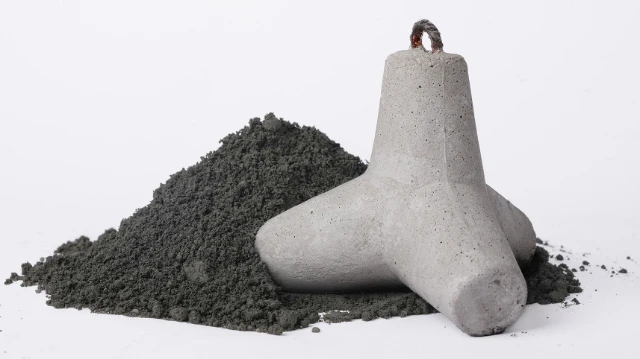
Heavy concrete
Iron silicate fines is applied in heavy concrete for civil and industrial structures, where there is a need for high density and heavy weight facilities. Although its heavy weight, heavy concrete with iron silicate fines has good workability and great density.
There are many applications of ISF heavy concrete:
- Heavy foundations for structures and facilities;
- Underground and tunnelling;
- Marine structures (coast protection, retaining walls, tetrapods, etc.);
- Bridges;
- Anchorages;
- Coatings for pipelines;
- Lego Blocks.
There are several benefits of ISF valorization in heavy concrete:
- Certified as a concrete aggregate according to EN 12620:2002+A1:2008;
- Increased strength and density of concrete (about 2,8kg/m3);
- Improved durability, especially waterproofing (Cw0,8 & Cd50 (BNS EN 206:2013 & NA.N)) and protection against the aggressive impact of chlorides, sulphates and salts
- Concrete volume stability (no shrinkage, no swelling);
- Reduced heat of hydration;
- Increased abrasion resistance (18±0,2cm3/50cm2 (BNS EN 13892-3:2015));
- Significantly increased frost resistance (∆m=0,2% & ∆f=2,3% (BNS EN 206:2013+A1:2016)).
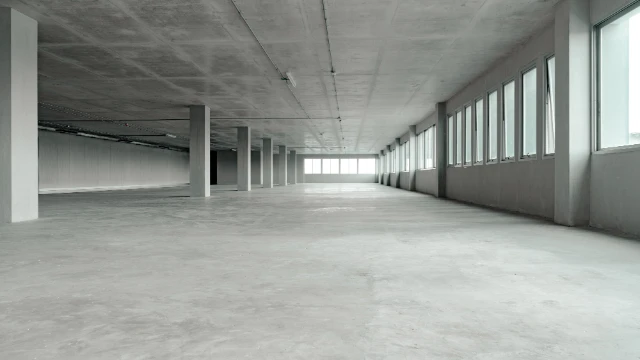
Large-area flooring
Large-area floorings are concrete surfaces with a large total area, designed for areas subject to heavy traffic and with high requirements for durability and performance. They are primarily made of concrete and are characterized by high strength, wear resistance, and the ability to withstand significant mechanical and dynamic loads.
Large-area pavements are widely used in:
- industrial and manufacturing sites;
- logistics centers and warehouse facilities;
- ports and container terminals;
- airport aprons and service areas;
- road junctions and areas with heavy-duty traffic;
- open storage and maneuvering areas.
The use of iron silicate fines in the composition of the pavements leads to significant improvements:
- Increased wear resistance – better resistance to abrasion under intensive use;
- Higher density and low porosity – limited penetration of water and aggressive media;
- Extended service life – better durability over time;
- Reduced risk of cracking – more homogeneous and stable structure;
- Improved surface quality – smoother and more wear-resistant surface;
- Resistance to climatic influences – better performance under freeze-thaw cycles.
Thanks to these characteristics, iron silicate fines is an effective solution for constructing durable and long-lasting large-area industrial floor coverings in both indoor and outdoor spaces.
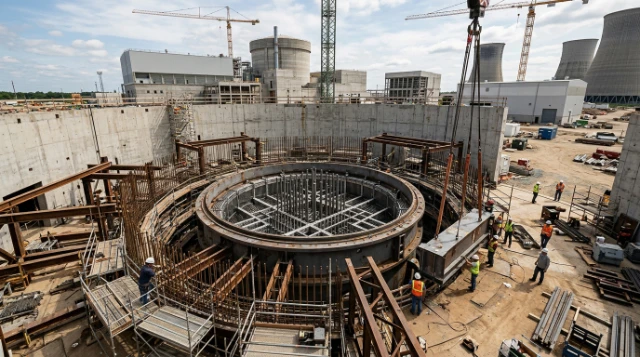
Shielding concrete
Shielding concrete is a specialized type of concrete designed to provide enhanced durability and protection for structures exposed to aggressive external influences. It plays a key role in protecting reinforcement and structural elements from the effects of chemical agents, radiation, and corrosion.
Thanks to its high density, low porosity, and improved physical and mechanical properties, shielding concrete limits the penetration of harmful substances and significantly slows down corrosion and degradation processes. This leads to an extended service life of structures and optimized maintenance costs.
The use of suitable mineral additives, such as iron silicate fines, further enhances the concrete’s durability and longevity by forming a more compact and stable structure.
This type of concrete is used for:
- walls, ceilings and floors against ionizing radiation;
- multi-threat protection from electromagnetic radiation;
- radiation protection in hospitals, laboratories, oncology clinics and waste treatment facilities;
- protection against the hazard of nuclear radiation leakage;
- protection against terrorist attacks;
- protection against extreme natural disasters.
There are several benefits of ISF valorisation in shielding concrete:
- Combines structure and shielding system;
- Increases strength and density of concrete (about 2,8kg/m3);
- Decreases maintenance and increase durability of structures;
- Reduction of size while maintaining high protection capacity;
- Thermal insulation capacity;
In Bulgaria, there are radiation shielding facilities in hospitals constructed using iron silicate fines.
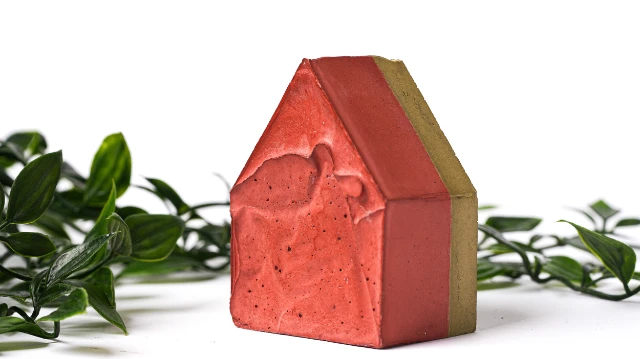
Ultra high performance concrete
Ultra High Performance Concrete (UHPC) is characterized by a very high compressive strength (above 150 MPa) and extreme durability, even when exposed to high aggressive environmental impacts. All these characteristics make it an alternative to other construction materials (e.g. steel) for the construction of transport and hydraulic facilities, high-rise buildings, as well as for special mine structures, structures for military application and high aesthetic architectural elements and details. At the same time, UHPC is a material, which complies with the policy of sustainable development by reducing the need for maintenance and rehabilitation of the facilities.
Iron silicate fines is one of the best materials for making UHPC, which bring plenty of benefits in the structures and elements:
- Compact the macro- and microstructure due to its small grain size;
- Increase the density by additional interaction with other ingredients;
- Increase the workability of the fresh mixtures;
- Reduce natural raw material utilization;
- Create long-term life products;
- Make sustainable final products.
The density of ISF UHPC is about 2,4 kg/m3 and the compressive strength exceeds 100MPa. In case thermal treatment is applied, the mechanical properties of concrete could increase by 30%. For application in thin structural elements subjected to flexture, it is recommended to use short (6 to 8 mm) steel fibres – 2% by volume.
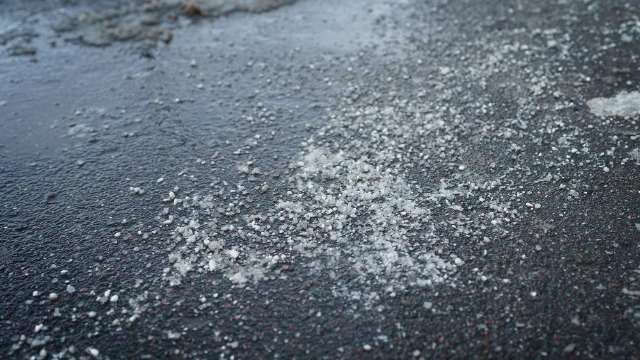
ISF de-icing concrete
De-icing concrete is a special mixture containing ingredients, which are electrically conductive. Ordinary concrete does not have this property. The composition of de-icing concrete consists of high quantities of iron
silicate fines (ISF) in combination with other geological materials with high iron content and a cocktail of building materials.
When de-icing concrete is connected to a power source its ingredients are heated and prevent ice formation on concrete surface. This special type of concrete is used on several US bridges and sidewalks and is invented by Prof.
Christopher Tuan and assigned by the University of Nebraska with Patent No.: US 6,825,444 B1. The concrete surface is heated up to +20°Celsius above the ambient temperature.
There are several benefits of ISF valorisation in de-icing concrete:
- Source of electrically conductive components;
- Improves the mechanical and durability properties of concrete;
- Certified building material according to EN 12620:2002+A1:2008;
- Sustainable building material.
A pedestrian walkway made of snow-melting concrete has been built in Bulgaria.
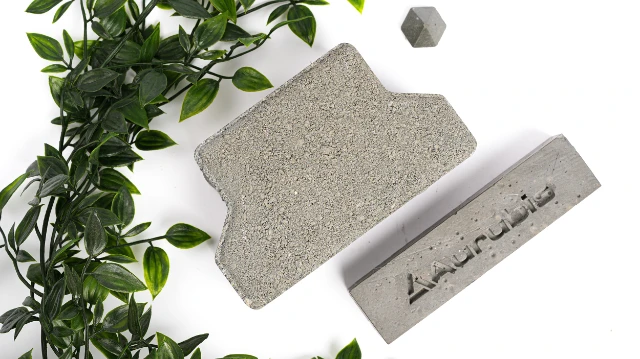
Vibro-pressed concrete products
Vibro-pressed concrete products are widely distributed in urban areas. The technology of their production requires a concrete mix design with specific workability and flowability of the fresh concrete mix and at the same time high mechanical properties and durability of the hardened products. Alternative materials, which in general improve the properties of hardened concrete, could be effectively utilized in paving products, if they cover the requirements for low water-cement ratio and formability of elements.
Iron silicate fines improve the compaction rate of the products thanks to their small grain size, which leads to improved appearance and durability. ISF can be used for a wide range of concrete products like tiles, blocks, panels, curbs, etc.
There are several benefits of ISF valorisation in paving products:
- Certified building material according to EN 12620:2002+A1:2008;
- Improved mechanical properties (up to 25%);
- Better durability due to compacted structure and possible pozzolanic activity of ISF with cement;
- Improved abrasion resistance (14±0,2cm3/50cm2 (BNS EN 1338:2005, app. H));
- Volume stability, no risk of alkali-silica reaction;
- Sustainable building material.
Iron silicate fines has been used since 2022 in the daily production of concrete products by a number of manufacturers throughout the country.
Dry mixtures
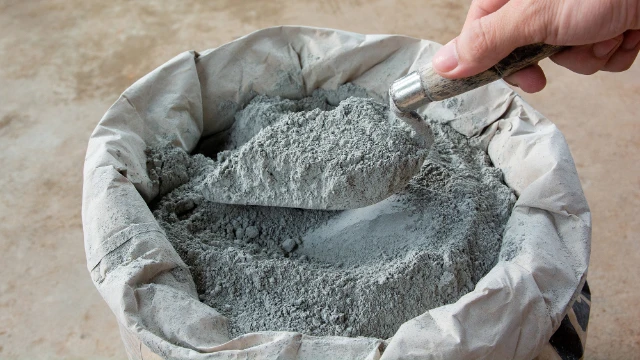
Aurubis iron silicate fines is a highly effective mineral additives that is widely used in the production of dry construction mixes. Thanks to its stable chemical composition, angular particle shape, and controlled particle size distribution, the material integrates easily into various formulations and helps improving key product properties.
There are usually two kinds of dry mortars - normal type and purposed type. Normal type includes masonry mortar, plastering mortar and ground mortar and special purposed ones: tile adhesive, interface dry powder, insulating mortar, self-levelling, water-proof mortar, repair mortar, wall putty, etc.
There are several benefits of ISF valorisation in dry mortars:
- Certified material according to EN 13139:2002/AC:2004.
- Improves fresh properties;
- Improves mechanical characteristics in hardened state;
- Absent of linear deformations;
- Reduced shrinkage.
Ceramic products
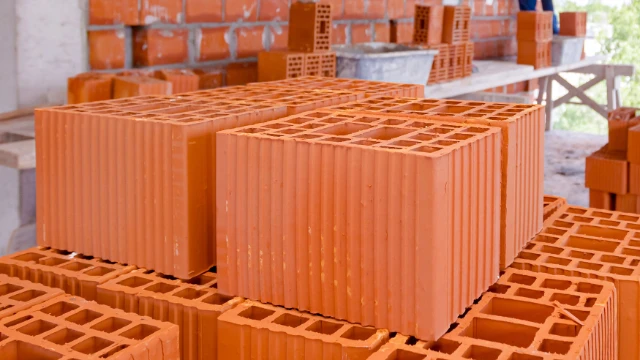
Ceramic is one of the most ancient building materials on our planet, dating from earlier than 10 000 years BC, used in products of different shapes, colours and mix designs.
Nowadays, scientists and the industry have been testing a wide range of alternative materials for ceramic production, which improve the properties of the final products on the one hand and reduce the extraction of natural resources on the other.
Iron silicate fines is such a material, which utilization leads to several benefits in different types of ceramic products (bricks, ceramic and clinker tiles & plates, roof tiles, etc.):
- Increase mechanical properties;
- Increase volume stability;
- Decrease plasticity during drying;
- Decrease linear shrinkage;
- Increasing sound and thermal insulation properties;
- Decreasing fossil fuels for the burning process, with results in decreasing CO2 release and burning costs.
The primary customers for iron silicate fines in the ceramics industry are manufacturers of masonry units and clinker tiles.
Detailed information on material certifications, specification, material safety data sheet, logistics and shipping options, can be obtained in our PDF brochures here.
Downloads
-

Um die heruntergeladene Komponente zu sehen den QR code scannen
Certificate of conformity of the factory production control
PDF
1 MB
-

Um die heruntergeladene Komponente zu sehen den QR code scannen
European Product Declaration ISO 14025 and EN 15804+A2
PDF
1 MB
-

Um die heruntergeladene Komponente zu sehen den QR code scannen
Declaration of performance EN 12620
PDF
2 MB
-

Um die heruntergeladene Komponente zu sehen den QR code scannen
Declaration of performance EN 13139
PDF
2 MB
-

Um die heruntergeladene Komponente zu sehen den QR code scannen
European Technical Assessment
PDF
5 MB
-

Um die heruntergeladene Komponente zu sehen den QR code scannen
ISF Construction Brochure
PDF
2 MB
Downloads
-

Um die heruntergeladene Komponente zu sehen den QR code scannen
ISF Specification
PDF
1 MB
-

Um die heruntergeladene Komponente zu sehen den QR code scannen
ISF Safety Information Sheet
PDF
1 MB
-

Um die heruntergeladene Komponente zu sehen den QR code scannen
ISF Process Card
PDF
1 MB
-

Um die heruntergeladene Komponente zu sehen den QR code scannen
ISF Logistics
PDF
1 MB
-

Um die heruntergeladene Komponente zu sehen den QR code scannen
ISF Visuals
PDF
1 MB